Buddhism Guide
  • Buddhism Guide
Home | Buddhism | Page 6
Category:

Buddhism

Vikramshila University
Buddhism

Vikramshila

by Sergei March 11, 2019
written by Sergei

Vikramshila — overview of meaning, background and key points, with links to related topics for context.

Vikramshila UniversityVikramshila University was one of the two most important centers of Buddhist learning in India, along with Nalanda University. Vikramashila was established by King Dharampal of Bengal (783 to 820) in response to a supposed decline in the quality of scholarship at Nalanda. Atisha, the renowned pandita, is sometimes listed as a notable abbot.

Vikramashila was destroyed by Muslim invaders along with the other major centers of Buddhism in India around 1200. Remains have been partially excavated at village Antichak in the Bhagalpur district, Bihar state, India, and the process is still underway.

March 11, 2019 0 comments
0 FacebookTwitterPinterestEmail
Vijñāna
Buddhism

Vijnana

by Sergei March 11, 2019
written by Sergei

Vijnana — overview of meaning, background and key points, with links to related topics for context.

VijñānaVijñāna is Sanskrit for consciousness. This page considers the Buddhist concept.

Specifically, a vijnana is a single moment of conceptual consciousness. It has two components: the awareness itself, and the object of that awareness (which might be a perception, a feeling etc.). Normal mental activity is considered to consist of a continual succession of vijnanas. Vijnana is contrasted with jnana, or pure awareness free of conceptual constructs.

Vijnana as an aggregate

Vijnana is one of the five aggregates, khanda, associated with rupa, vedana, sanna and sankhata: body, feeling, perception and mental activities. All of the aggregates are to be seen as empty of self-nature; that is, they arise dependent on causes and conditions. The cause for the arising of a vijnana is the object of awareness.

Six vijnanas

Most of buddhist schools consider six vijnana, but some describe more.

  1. Eye consciousness
  2. Ear consciousness
  3. Nose consciousness
  4. Mouth consiousness
  5. Body consciousness
  6. Mind consciousness describe the consciousness of “ideas” – buddhism describes not five but six perceptions.

Analysis of vijnana

The Patthana part of the theravadin Abhidharma analysis the different states of consciousness and their functions. The theravada school method is to study every consciousness.
Some states of consciousness are positive, some negative and some neutral. This analysis is based on the principle of karma, the main point in understanding the different consciousness.

Nevertheless, these vijnana are not considered as “ultimate phenomenoms” as they gather mental factorrs, caitasika. One example : the first dhyana, a meditative state, is described as based on five ultimate mental factors : vitaka, civara, piti (rapture), sukkha (serenity) and ekkagata (or stability of the mind).

Eight vijnana

The yogacara cittamatra school consider two more consciousness.

  1. a consiousness called klistamanas, which gathers the hindrances, the poisons, the karmic formations.
  2. the alayavijnana is the consciousness “basis of everything”. Every consciousness is based on this one. It is the phenomenom which explains the rebirth.

Amalavijnana

The amalavijana is considered by some Yogacara’s schools as a ninth consciousness. It is the pure state associated with the nirvana. But some schools considers the amalavijnana to be the pure aspect of the alayavijnana.

March 11, 2019 0 comments
0 FacebookTwitterPinterestEmail
Vicara
Buddhism

Vicara

by Sergei March 11, 2019
written by Sergei

Vicara — overview of meaning, background and key points, with links to related topics for context.

VicaraVicara means the way mind maintains attention toward any object.

It first referred to hinduist yoga, later to buddhist meditation.

Vicara in buddhism

Vicara is a term of buddhist psychology. This term is mosly used to describe the internal feeling of the yogi who practices samatha bhavana, that is the meditation technique consisting in focusing the mind to one single point. Nevertheless, this term can be used to describe the practice of vipassana or even, outside of any meditation context, the simple fact to maintain awareness on any object.

In the meditation practices, the mind catches a mental object (see : vitakka), which means the meditator try to notice a feeling and to stay aware of it. He cultivates consciousness of this object – and the term object is understood as a psychological object, a perception.

Vicara is focusing on an object, and holding it in consciousness, to meditate on it – Like meditating over a candle flame. You meditate on the flame, watch it move, so eventually you are no longer yourself, but you can “become” the flame. The meditator focus all his attention on the object but not on the self image, or the distinction between himself and his environment.

Vicara eventually become one of the five factors of the first jhana.

March 11, 2019 0 comments
0 FacebookTwitterPinterestEmail
Vibhajja
Buddhism

Vibhajjavada

by Sergei March 11, 2019
written by Sergei

Vibhajjavada — overview of meaning, background and key points, with links to related topics for context.

VibhajjaVibhajjavada (Pāli), is an umbrella classification for Buddhist denominations that promote analysis as a primary tool for developing insight. The word Vibhajjavada can be broken into Vibhajja, loosely meaning “analysis”, and vada meaning animated discussion. Hence, the term “Vibhajjavada” can mean “animated analytical discussion.’

During the third Buddhist Council, all orthodox schools, which at the time were sub-divisions of Sthaviravada, were regrouped into this new school. These groups had split into different sects during the reign of Emperor Asoka. The Vibhajjavada school says that the first step to insight has to be achieved by the aspirant’s experience, critical investigation, and reasoning instead of by blind faith.

This school was introduced to Sri Lanka by the Venerable Mahinda, son of Emperor Asoka, who brought with him the Pali Canon. Vibhajjavada is an ancestor of the school known today as Theravada.

March 11, 2019 0 comments
0 FacebookTwitterPinterestEmail
世親
Buddhism

Vasubandhu

by Sergei March 11, 2019
written by Sergei

Vasubandhu — overview of meaning, background and key points, with links to related topics for context.

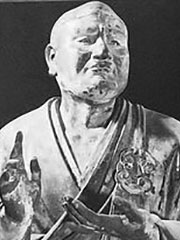
世親Vasubandhu (Sanskrit. Chinese 世親. Korean 세친) was an Indian Buddhist scholar-monk, and along with his half-brother Asanga, one of the main founders of the Indian Yogācāra school. Vasubandhu is one of the most influential figures in the entire history of Buddhism.

Born in Gandhāra in the fourth century, he was at first a Sarvāstivādin when he initially studied Sarvāstivādin Abhidharma, as presented in the Mahā-vibhāsa. Dissatified with those teachings, he wrote the Abhidharmakośa in verse and his auto-commentary, the Abhidharmakośa-bhāsya, an important summary and critique of the Mahāvibhāsa from the Sautrāntrika viewpoint.

He later converted to Mahāyāna and composed many other voluminous treatises, especially on Yogācāra doctrines. Most influential in the East Asian Buddhist tradition was probably the Trimśikā, the Thirty Verses on Representation-only and its companion Vimśatikā, but he also wrote a large number of other works, including:

  • a commentary to the Mahāyāna-samgraha
  • the Daśabhūmikabhāsya (Ten Stages Sutra)
  • Catuhśataka-śāstra
  • Mahāyāna śatadharmā-prakāśamukha śāstra
  • Amitayus sutropadeśa
  • Discourse on the Pure Land

Some modern scholars, notably Frauwallner, have sought to distinguish two Vasubandhus, one the Yogācārin and the other a Sautrāntika, but this view should probably be rejected now on the basis of the anonymous Abhidharma-dīpa, a critique of the Abhidharmakośa which clearly identifies Vasubandhu as the sole author of both groups of writings.

References

  • Abhidharma Kosha Bhashyam 4 vols, Vasubandhu, translated into English by Leo Pruden (based on Louis de la Vallée Poussin’s French translation), Asian Humanities Press, Berkeley, 1988-90.
  • Stefan Anacker, Seven Works of Vasubandhu Motilal Banarsidass, Delhi, 1984, 1998
  • David J. Kalupahana, The Principles of Buddhist Psychology, State University of New York Press, Albany, 1987, pp173-192
  • Francis H. Cook, Three Texts on Consciousness Only, Numata Center for Buddhist Translation and Research, Berkeley, 1999, pp371-383 (“Thirty Verses on Consciousness Only”) and pp385-408 (“Twenty Verses on Consciousness Only”)
  • Thich Nhat Hanh Transformation at the Base (subtitle) Fifty Verses on the Nature of Consciousness, Parallax Press, Berkeley, 2001; inspired in part by (but not necessarily faithful to) Vasubandhu and his Twenty Verses and Thirty Verses texts

Indian philosophy

Hindu philosophy Samkhya | Nyaya | Vaisheshika | Yoga | Mimamsa | Advaita Vedanta | Vishishtadvaita | Dvaita | Carvaka | Logic
Jain philosophy
Buddhist philosophy Shunyata
Philosophers Akshapada Gotama | Patanjali | Yajnavalkya | Kanada | Kapila | Jaimini | Vyasa | Nagarjuna | Madhavacharya | Kumarajiva | Padmasambhava | Vasubandhu | Adi Shankara| Ramanuja| More..
Texts Yoga Sutra | Nyaya Sutra | Vaiseshika Sutra | Samkhya Sutra | Mimamsa Sutra | Brahma Sutra | Mūlamadhyamakakārikā | More..
March 11, 2019 0 comments
0 FacebookTwitterPinterestEmail
Vassa
Buddhism

Vassa

by Sergei March 11, 2019
written by Sergei

Vassa — overview of meaning, background and key points, with links to related topics for context.

VassaVassa (Thai พรรษา, pansa or phansaa), also called Rains Retreat, is the traditional retreat during the rainy season lasting for three lunar months from July to October. During this time Buddhist monks remain in a single place, generally in their temples. In some monasteries, monks dedicate the Vassa to intensive meditation practice. During Vassa, many Buddhist lay people reinvigorate their spritual training and adopt more ascetic practices, such as giving up meat, alcohol, or smoking (Vassa is sometimes known as “Buddhist Lent”). And in countries such as Thailand, the laity will often take monastic vows for the Vassa period and then return to lay life. Commonly, the number of years a monk has spent in monastic life is expressed by counting up the number of Vassas he has observed.

The retreat has largely been given up by Mahayana Buddhists.

The origins of the vassa tradition are ascribed to early Buddhist times. Gautama Buddha ordered his disciples to observe a pre-existing practice whereby holy men avoided travelling for a three month period during the rainy season, in order to avoid damaging crops.

The period begins on the first day of the waning moon in the eighth lunar month; the preceding day is Asalha Puja. The focus of celebration by the laity is the first day of vassa, Wan Kao Pansa, during which worshippers donate candles and other necessities to temples, a ceremony which has reached its most extravagant form in the Ubon Ratchathani Candle Festival.

Vassa is followed by two of the major festivals of the year among Theravada Buddhists, Wan Awk Pansa and Kathina.

The end of vassa is marked by joyous celebration. The following month, the Kathina ceremony is held, during which the laity gathers to make formal offerings of robe cloth and other requisites to the Sangha.

See also

  • Uposatha Vassa
March 11, 2019 0 comments
0 FacebookTwitterPinterestEmail
Vajrayana
Buddhism

Vajrayana

by Sergei March 11, 2019
written by Sergei

Vajrayana — core ideas and practices, how it differs from other schools, and where it fits in Buddhist history.

VajrayanaVajrayāna Buddhism is often viewed as the third major ‘vehicle’ (Yana) of Buddhism, alongside the Theravada and Mahayana. The Vajrayana is an extension of Mahayana Buddhism consisting not of philosophical differences, but rather the adoption of additional techniques (upaya, or ‘skilful means’).

Vajrayana exists today in the form of two major sub-schools:

  • Tibetan Buddhism, found in Tibet, Bhutan, northern India, Nepal, southwestern and northern China, Mongolia and, various constituent republics of Russia that are adjacent to the area, such as: Amur Oblast, Buryatia, Chita Oblast, Tuva Republic, and Khabarovsk Krai. There is also Kalmykia, another constituent republic of Russia that is in fact the only Buddhist region in Europe, located in the north Caucasus.
  • Shingon Buddhism, found in Japan

Distinguishing features of Vajrayana

Vajrayana Buddhism claims to provide an accelerated path to enlightenment. This is achieved through use of tantra techniques, which are practical aids to spiritual development, and esoteric transmission (explained below). Whereas earlier schools might provide ways to achieve nirvana over the course of many lifetimes, Vajrayana techniques are said to make full enlightenment or Buddhahood possible in a much shorter timeframe, perhaps in a single lifetime. Vajrayana Buddhists do not claim that Theravada or Mahayana practices are in any way invalid, only that they represent slower paths. It should also be noted that the goal of the Mahayana and Vajrayana is the attainment of Buddhahood, whereas the goal for Theravada practice is liberation from the cycle of rebirth (samsara) by achieving Nirvana.

Tantra techniques

Vajrayana relies on various tantric techniques rooted in scriptures known as tantras, written in India. The most important aspect of the tantric path is to ‘use the result as the Path’; which means that rather than placing full enlightenment as a goal far away in the future, one tries to identify with the enlightened body, speech and mind of a Buddha. The buddha-form which one can best relate to is called the yidam (Tibetan) or (Sanskrit: ishtadevata) or ‘personal buddha-form’. In order to achieve this self-identification with a buddha-form, much symbolism and visualization is used in Buddhist tantric techniques.

Secrecy is a cornerstone of tantric Buddhism, simply to avoid the practices from harming oneself and others without proper guidance. One should realise that it is not even allowed to explain the full symbolism and psychology of the practice to the un-initiated, so obviously, this leads to misunderstanding and dismissal. Tantric techniques may initially appear to consist of ritualistic nonsense; however, it should only be practiced on the basis of a thorough understanding of Buddhist philosophy and strictly following the traditions.

Tantric techniques include:

  • repetition of special ritual phrases (mantras),
  • use of various yoga techniques, including breath control (Pranayama), yantra and the use of special hand positions (mudras)
  • use of an extensive vocabulary of visual aids, such as cosmic mandala diagrams which teach and map pathways to spiritual enlightenment
  • the use of ritual objects such as the vajra and bell (ghanta), hand drum (damaru), and many other symbolic tools and musical instruments
  • use of specialized rituals rooted in Vajrayana cosmology and beliefs
  • importance of a guru-disciple relationship, for example by ritual ’empowerments’ or ‘initiations’ wherein the student obtains permission to practice a particular tantra.
  • of most importance are the oral transmissions given by a tantric master. These teachings are only given personnally from teacher to student and are secret, because they demand a certain maturity of the student. Otherwise they might have a negative effect. Such teachings describe certain aspects of the mind and how to attain them, realize them by certain practices that can be dangerous to ones health if not prepared thoroughly, as such states of mind are normally experienced at the time of death. A mature yogi ‘dies’ in the meditation and comes back again, experiencing all the levels of mind.

There is an aspect of sex in Buddhist tantra which is first and foremost intended as symbolic, although there is also an aspect of transforming one’s sexual energy into a blissful consciousness which can then be directed towards achieving wisdom and enlightenment through the act of sexual intercourse. However, it cannot be stressed enough that this has very little to do with ‘having sex’ in the normal sense; instead it is about controlling and directing one’s sexual energies towards the greater goal. Sexual symbolism is common in Vajrayana iconography, where it basically represents the marriage of wisdom and compassion or method.

It is from the tantra that Vajrayana Buddhism gets the alternative names of Mantrayana and Tantrayana. The word “Vajrayana” itself comes from vajra, a Sanskrit word which can mean “diamond”, “indestructible” or “thunderbolt” and which also has the connotation of “reality”. This gives rise to two more names for Vajrayana Buddhism: Diamond Vehicle, and Adamantine Vehicle (adamantine means “diamond-like”). The vajra (or dorje in Tibetan) is an important ritual object which symbolizes compassion/method, while the bell symbolizes wisdom.

Vajra is also believed to be the weapon of ancient Hindu god Indra, which was made out of the sacrificial offerings of the bones of Rishi Dadhichi.

Esoteric Transmission (Initiation)

The other conspicuous aspect of Vajrayana Buddhism is that it is esoteric. In this context esoteric means that the transmission of certain accelerating factors only occurs directly from teacher to student during an initiation and cannot be simply learned from a book. Many techniques are also commonly said to be secret, but some Vajrayana teachers have responded that the secrecy itself is not important but only a side-effect of the reality that the techniques have no validity outside the teacher-student lineage. As these techniques are said to be highly effective, when not practiced properly, the practitioner can harm him/herself physically and mentally. In order to avoid these kind of dangers, the practice is kept ‘secret’ outside the teacher/student relationship. The esoteric aspects of Vajrayana Buddhism results in several more names for the school: Secret Buddhism, Esoteric Mahayana, and Esoteric Buddhism (the most common name in Japan).

The esoteric transmission framework can take varying forms. The Nyingma school of Tibetan Buddhism uses a method called dzogchen. Other Tibetan Kagyu schools and the Shingon school in Japan use an alternative method called mahamudra.

Relationship with Mahayana

While tantra and esoterism distinguish Vajrayana Buddhism, it is, from the Tibetan Buddhist point of view, nonetheless primarily a form of Mahayana Buddhism. Sutras important to Mahayana are generally important to Vajrayana, although Vajrayana adds some of its own (see Buddhist texts, list of sutras, Tibetan Buddhist canon). The importance of bodhisattvas and a pantheon of deities in Mahayana carries over to Vajrayana, as well as the perspective that Buddhism is not just for monks but for the laity too.

The Japanese Vajrayana teacher Kukai expressed a view contrary to this by making a clear distinction between Mahayana and Vajrayana. Kukai characterises the Mahayana in its entirety as exoteric, and therefore provisional. From this point of view the esoteric Vajrayana is the only Buddhist teaching which is not a compromise with the limited nature of the audience to which it is directed, since the teachings are said to be the Dharmakaya (the principle of enlightenment) in the form of Mahavairocana, engaging in a monologue with himself. From this view the Hinayana and Mahayana are provisional and compromised aspects of the Vajrayana – rather than seeing the Vajrayana as primarily a form of Mahayana Buddhism.

Some aspects of Vajrayana have also filtered back into Mahayana. In particular, the Vajrayana fondness for powerful symbols may be found in weakened form in Mahayana temples where protector deities may be found glaring down at visitors.

History of Vajrayana

India

There are differing views as to just where Vajrayana started, some claiming that it began in Udyana – the modern day Swat valley in Pakistan, while others say that it began in southern India. In the Tibetan tradition, it is claimed that the historical Shakyamuni Buddha taught tantra, but as these are ‘secret’ teachings outside the teacher/disciple relationship, they were written down generally long after the Buddhas other teachings, known as sutras.

The earliest texts appeared around the early 4th century.Nalanda University in northern India became a center for the development of Vajrayana theory, although it is likely that the university followed, rather than led, the early Tantric movement. India would continue as the source of leading-edge Vajrayana practices up through the 11th century.

(Vajrayana) Buddhism had mostly died out in India by the 13th century, its practices merging with Hinduism, and both tantric religions experiencing pressure from the rising importance of Islam. By that time, the vast majority of the practices were also made available in Tibet, where they were preserved until recently.

In the second half of the 20th century a sizeable number of Tibetan exiles fled the oppressive anti-religious rule of the Communist Chinese to establish Tibetan Buddhist communities in northern India, particularly around Dharamsala. They remain the primary practitioners of Tantric Buddhism in India and the entire world.

China

Vajrayana followed the same route into northern China as Buddhism itself, arriving from India via the Silk Road some time during the first half of the 7th century. It arrived just as Buddhism was reaching its zenith in China, receiving sanction from the emperors of the Tang Dynasty. The Tang capital at Chang’an (modern-day Xi’an) became an important center for Buddhist studies, and Vajrayana ideas no doubt received great attention as pilgrim monks returned from India with the latest texts and methods (see Buddhism in China, Journey to the West).

Tibet and other Himalayan kingdoms

In 747 the Indian master Padmasambhava traveled from Afghanistan to bring Vajrayana Buddhism to Tibet and Bhutan, at the request of the king of Tibet. This was the original transmission which anchors the lineage of the Nyingma school. During the 11th century and early 12th century a second important transmission occurred with the lineages of Atisa, Marpa and Brogmi, giving rise to the other schools of Tibetan Buddhism, namely Kadampa, Kagyupa, Sakyapa, and Gelukpa (the school of the Dalai Lama).

Japan

In 804, Emperor Kammu sent the intrepid monk Kukai to the Tang Dynasty capital at Chang’an (present-day Xi’an) to retrieve the latest Buddhist knowledge. Kukai absorbed the Vajrayana thinking and synthesized a version which he took back with him to Japan, where he founded the important Shingon school of Buddhism, a school which continues to this day.

See also Tendai and Shinnyo En

Indonesia and Malaysia

In the late 8th century, Indian models of Vajrayana traveled directly to the Indonesian island of Java where a huge temple complex at Borobudur was soon built. The empire of Srivijaya was a centre of Vajrayana learning and Atisha studied there under Serlingpa, an eminent Buddhist scholar and a prince of the Srivijayan ruling house. Vajrayana Buddhism survived in Indonesia and Malaysia until eclipsed by Islam in the 13th century.

Mongolia

In the 13th century, long after the original wave of Vajrayana Buddhism had died out in China itself, two Tibetan eminent Sakyapa teachers, Sakya Pandita Kunga Gyaltsen and Chogyal Phagpa, visited the Mongolian royal court. Marco Polo was serving the royal court at about the same time. In a competition between Christians, Muslims, and Buddhists held before the royal court, Prince Godan found Tibetan Buddhism to be the most satisfactory and adopted it as his personal religion, although not requiring it of his subjects. As Kublai Khan had just conquered China (establishing the Yuan Dynasty), his adoption of Vajrayana led to the renewal of Tantric practices in China as the ruling class found it useful to emulate their leader.

Vajrayana would decline in China and Mongolia with the fall of the Yuan Dynasty, replaced by resurgent Daoism, Confucianism, and Pure Land Buddhism. However, Mongolia would see yet another revival of Vajrayana in the 17th century, with the establishment of ties between the Dalai Lama in Tibet and the remnants of the Mongol Empire. This revived the historic pattern of the spiritual leaders of Tibet acting as priests to the rulers of the Mongol empire. Tibetan Buddhism is still practiced as a folk religion in Mongolia today despite more than 80 years of state-sponsored communism.

See also

  • Kalu Rinpoche
  • Pema Chodron
  • Chhimed Rigdzin Rinpoche
  • Dzogchen
March 11, 2019 0 comments
0 FacebookTwitterPinterestEmail
Vajrapani
Buddhism

Vajrapani

by Sergei March 11, 2019
written by Sergei

Vajrapani — overview of meaning, background and key points, with links to related topics for context.

VajrapaniVajrapani (Sanskrit Vajra:thunderbolt/diamond, Pani:lit.in the hand; chn. Jin Gang) is one of the earliest bodhisattvas of Mahayana Buddhism. He is the protector and guide of the Buddha, and rose to symbolize the Buddha’s power.

Vajrapani was used extensively in Buddhist iconography as one of the three protective deities surrounding the Buddha. Each of them symbolizes one of the Buddha’s virtues:Manjusri (the manifestation of all the Buddhas’ wisdom), Avalokitesvara (the manifestation of all the Buddhas’ compassion) and Vajrapani (the manifestation of all the Buddhas’ power).

Doctrine

On the popular level, Vajrapani, Holder of the Thunderbolt Scepter (symbolizing the power of compassion), is the Bodhisattva who represents the power of all the Buddhas, just as Avalokiteshvara represents their great compassion, Manjushri their wisdom, and Tara their miraculous deeds. For the yogi, Vajrapani is an archetype deity of fierce determination and symbolizes unrelenting effectiveness in the conquest of negativity.

His taut posture is the active warrior pose (pratayalidha), based on an archer’s stance but resembling the en garde position in Western fencing. His outstretched right hand brandishes a vajra and his left hand deftly holds a lasso – with which he binds demons. He wears a skull crown with his hair standing on end. His expression is wrathful and he has a third eye. Around his neck is a serpent necklace and his loin cloth is made up of the skin of a tiger, whose head can be see on his right knee.

Vajrapani is believed to be the savior of snakes (nagas), and since the Nagas are believed to control the rain-clouds, Vajrapani as their protector is looked upon as the Rain God, and it is to him Buddhists appeal when rain is needed, or is too abundant. In this capacity Vajrapani is identified with Indra, the Indian god of Rain.

Iconography

The first representations of Vajrapani in India associated him with the Hindu God Indra.

As Buddhism expanded in Central Asia, and fused with Hellenistic influences into Greco-Buddhism, the Greek hero Hercules was adopted to represent Vajrapani. He was then typically depicted as a hairy, muscular athlete, wielding a short “diamond” club .

Mahayana Buddhism then further spread to China, Korea and Japan from the 6th century.

In Japan, Vajrapani is known as Shukongōshin (執金剛神, “Diamond rod-wielding God”), and has been the inspiration for the Niō (仁王, lit. Benevolent kings),the wrath-filled and muscular guardian god of the Buddha, standing today at the entrance of many Buddhist temples under the appearance of frightening wrestler-like statues.

March 11, 2019 0 comments
0 FacebookTwitterPinterestEmail
Urgyen Trinley Dorje
Buddhism

Urgyen Trinley Dorje

by Sergei March 11, 2019
written by Sergei

Urgyen Trinley Dorje — overview of meaning, background and key points, with links to related topics for context.

Urgyen Trinley DorjeUrgyen Trinley Dorje (Wylie transliteration: U-rgyan Phrin-las Rdo-rje) (b. June 26, 1985), also spelled Ogyen Trinley Dorje (and Orgyen Trinley Dorje & Ugyen Trinley Dorje) is recognized by many followers as the 17th Karmapa, leader of the Karma Kagyu school of Tibetan Buddhism.

Born in Kham, Tibet to largely nomadic parents, Urgyen Trinley Dorje is said to have identified himself to family members as the Karmapa early in childhood. He was seven years old before he was recognized by a search party headed by the Tai Situpa, following instructions left by the previous Karmapa in a prophetic letter and hidden in a locket. Urgyen Trinley Dorje was installed at Tsurphu (mtshur-phu) monastery, the traditional seat of the Karmapa in Tibet, where he lived for another seven years.

Over the 2000 Millennium he escaped to Nepal and then India, arriving in the Dalai Lama’s exile headquarters of Dharamsala on January 5, 2000. Urgyen Trinley Dorje had felt that he was unable to obtain in China the specialized instruction he needed to complete his studies and to realize his full spiritual authority.

A controversy exists over the identity of the true 17th Karmapa: the Shamarpa, arguably the second highest Karma Kagyu lama, does not recognize Urgyen Trinley Dorje and instead has proclaimed another boy, Thaye Dorje (mtha’-yas), whom he identified a few years earlier, as the true Karmapa. Urgyen Trinley Dorje, however, is supported by most of the Kagyu hierarchy, including two of those charged with finding the new Karmapa: Tai Situpa and Gyaltsapba (a fourth such lama, Jamgon Kongtrul (byams-mgon-dkon-sprul), died shortly before the controversy arose.)

Other high Kagyu lamas who support Urgyen Trinley Dorje include H.E. the Fourth Jamgon Kongtrul Rinpoche, H.E. the Eleventh Pawo Rinpoche, the Ninth Traleg Kyabgon Rinpoche, the Ninth Khenchen Thrangu Rinpoche, the Third Kalu Rinpoche, the Seventh Dzogchen Ponlop Rinpoche and his Nalandabodhi organization, the Twelfth Surmang Trungpa Rinpoche, the Seventh Yongey Mingyur Rinpoche, the Third Tenga Rinpoche, the Venerable Khenpo Tsultrim Gyamtso Rinpoche, the Venerable Bokar Rinpoche, Bardor Tulku Rinpoche, the Venerable Khenpo Karthar Rinpoche (abbot of Karma Triyana Dharmachakra), H.E. Sakyong Mipham Rinpoche and his organization, Shambhala International, the Venerable Drupon Rinpoche, and Lama Norlha Rinpoche, among others. He is also recognized as Karmapa by the current Dalai Lama.

References

The Dance of 17 Lives : The Incredible True Story of Tibet’s 17th Karmapa, by Mick Brown. New York, NY: Bloomsbury USA, 2005. ISBN: 1582345988

Music in the Sky: The Life, Art & Teachings of the 17th Karmapa Ogyen Trinley Dorje, by Michele Martin. Ithaca, New York: Snow Lion Press, 2003. ISBN 1559391952.

Karmapa of Tibet: The Politics of Reincarnation, by Lea Terhune. Somerville, MA: Wisdom Publications, 2004. ISBN: 0861711807

See also

  • Kagyu
  • Karmapa controversy
March 11, 2019 0 comments
0 FacebookTwitterPinterestEmail
Uposatha
Buddhism

Uposatha

by Sergei March 11, 2019
written by Sergei

Uposatha — overview of meaning, background and key points, with links to related topics for context.

UposathaUposatha days are times of renewed dedication to Dhamma practice, observed by both lay people and monastics throughout the world of Theravada Buddhism.

For monastics, these are often days of more intensive reflection and meditation. In many monasteries, physical labor (construction projects, repairs, etc.) is curtailed. On New Moon and Full Moon days the fortnightly confession and recitation of the Patimokkha (monastic rules of conduct) takes place.

Lay people observe the eight precepts on Uposatha days, as a support for meditation practice and as a way to re-energize commitment to the Dhamma. Whenever possible, lay people use these days as an opportunity to visit the local monastery, in order to make special offerings to the Sangha, to listen to Dhamma, and to practice meditation with Dhamma companions late into the night.

March 11, 2019 0 comments
0 FacebookTwitterPinterestEmail
Upekkha
Buddhism

Upekkha

by Sergei March 11, 2019
written by Sergei

Upekkha — overview of meaning, background and key points, with links to related topics for context.

UpekkhaUpeksa, also upekkha in Pali, is the Buddhist concept of equanimity. It is one of the four Brahmavihara (sublime states), which is a subset of Kammatthana.

Equanimity is a balanced state of mind characterized by lack of strong attachments – attractions (cravings or desires) or repulsions (aversions). In equanimity one still notices and cares about what is going on, and has the capacity to be active rather than merely reactive. It might be compared to the eye of a storm.

March 11, 2019 0 comments
0 FacebookTwitterPinterestEmail
Upaya
Buddhism

Upaya

by Sergei March 11, 2019
written by Sergei

Upaya — overview of meaning, background and key points, with links to related topics for context.

UpayaUpaya is a term in Mahayana Buddhism which is often translated as “means”, though literally “expedient” would be more accurate, as “upaya” (from upa√i) refers to something which goes or brings you up to something (i.e., a goal).

The term is often used with kaushalya (“cleverness”); upaya-kaushalya means roughly “skill in means”. Upaya-kaushalya is a concept which emphasizes that practitioners may use their own specific methods or techniques in order to cease suffering and introduce others to the dharma. The implication is that even if a technique, view, etc., is not ultimately “true” in the highest sense, it may still be an expedient practice to perform or view or hold; i.e., it may bring the practitioner closer to true realization anyway.

One consequence of this is that it is possible to endorse a form of Buddhist practice as viable while simultaneously critiquing its premises or contrasting it unfavorably to another, higher practice. In some Mahayana texts, such as the Lotus Sutra, this is used as a polemic device against earlier Buddhist traditions; it is said that the Buddha gave them various upayas rather than revealing the ultimate truth, for which they were not ready.

In a famous story from the Lotus Sutra, often given as an example of upaya, is that of a man who comes home to find his house on fire and his children inside entertaining themselves with their favorite playthings. He calls out to his children to leave the house, but they do not believe it to be on fire, and they do not stop playing with the toys. Thinking about how he may use expedient means, the man tells his children that he has arranged for a them to receive gilded carts and toy oxen play with, and that these entertainments await just outside the gate of the house. Hearing this, the children run from the burning house and are saved.

The most important concept in skill in means is the use, guided by wisdom and compassion, of a specific teaching (means) geared to the particular audience taught. Edward Conze, in A Short History Of Buddhism, says “‘Skill in means’ is the ability to bring out the spiritual potentialities of different people by statements or actions which are adjusted to their needs and adapted to their capacity for comprehension.”

The concept of skillful means becomes important in Mahayana Buddhism with regards to the actions of a bodhisattva. The idea is that a bodhisattva or practitioner may use any expedient methods in order to help ease the suffering of people, introduce them to the dharma, or help them on their road to nirvana.

This doctrine is sometimes used to explain some of the otherwise strange or unorthodox behaviour engaged in by Buddhist practitioners in certain cases. In employing skillful means, it becomes theoretically possible that many seemingly proscribed practices, such as violence, theft, and sexuality could be seen as use of skillful means. The use of harsh violence to one’s disciples has occasionally been used as a way of opening their eyes to the nature of self and suffering; an example is the story of a Zen priest who ended a conversation with a disciple by slamming shut a door on the disciple’s leg, fracturing the leg and, according to the story, causing a deep insight in the disciple. There are a number of other stories of Buddhist saints and bodhisattvas taking part in fairly eccentric and unusual behaviours in the practice of skillful means.

The practices and rituals of Vajrayana Buddhism are also often interpreted as a process of skillful means. They are understood to be means whereby practitioners use the very misconceptions and properties of mundane existence to help themselves reach enlightenment.

March 11, 2019 0 comments
0 FacebookTwitterPinterestEmail
Upasaka
Buddhism

Upasaka

by Sergei March 11, 2019
written by Sergei

Upasaka — overview of meaning, background and key points, with links to related topics for context.

UpasakaUpasaka (Sanskrit for “servant”, female upasika) describes followers of Buddhism (Gautama Buddha) not being a monk or a member of a Buddhistic order; a lay follower.

The five virtues to be held by this lay practitioner are referred to as “Pancashila”:1. I will not take the life of a living being; 2. I will not take what has not been given to me; 3. I will refrain from sexual misconduct; 4. I will refrain from harmful speech; 5. I will refrain from becoming intoxicated.

March 11, 2019 0 comments
0 FacebookTwitterPinterestEmail
Upali
Buddhism

Upali

by Sergei March 11, 2019
written by Sergei

Upali — overview of meaning, background and key points, with links to related topics for context.

UpaliUpali was a monk in the order of Siddhartha. Before joining the order, its interesting to note he worked as a barber.

He was the first monk to be ordained by Buddha, and therefor wielded considerable power over kings and people of royal birth who came to join the order after him.

In the literature of every Buddhist school, Upali is depicted as an expert in monastic discipline and the monastic code. At the First Buddhist Council, he was asked to recite the Vinaya and monastic code. He attained the state of arhatship before his death, and is regarded as the ‘patron saint’ of monks who specialize in the Vinaya.

March 11, 2019 0 comments
0 FacebookTwitterPinterestEmail
Newer Posts
Older Posts

Must-Read

  • Meditation
  • Zen
  • Dhyāna
  • Buddhism by Country
  • History Of Buddhism
  • Greco-buddhism
  • Avatar
  • Koan
  • Buddha
  • Shambhala Buddhism
  • Dalai Lama
  • Fourteenth Dalai Lama
  • List Of Buddhists
  • Dzogchen
  • Buddhist Art
  • Buddhist Texts
  • Dharma Wheel
  • Mahayana

2016 - 2026 - Buddhism-Guide.com


Back To Top
Buddhism Guide
  • Buddhism Guide