Buddhism Guide
  • Buddhism Guide
Home | Buddhism
Category:

Buddhism

Buddhism

Buddhism by Country

by Sergei February 28, 2022
written by Sergei

Buddhism by Country 2 — overview of meaning, background and key points, with links to related topics for context.

The percentage of Buddhist population of each country was taken from the US State Department’s International Religious Freedom Report 2004 . Other sources used were CIA Factbook and adherents.com . The total population of each country was taken from census.gov (2005 estimates). Some adherents give much higher figures:

Buddhism By country

Buddhism by country
Region Country Population(2005E) % of Buddhists Buddhist total
Central Asia Buddhism in Afghanistan 29,928,987 n/a n/a
Balkans Buddhism in Albania 3,563,112 n/a n/a
North Africa Buddhism in Algeria 32,531,853 n/a n/a
Southern Africa Buddhism in Angola 11,190,786 n/a n/a
South America Buddhism in Argentina 39,537,943 0.1% 40,000
Middle East Buddhism in Armenia 2,982,904 n/a n/a
Oceania Buddhism in Australia 20,090,437 1.9% 380,000
Central Europe Buddhism in Austria 8,184,691 0.127% 10,400
Middle East Buddhism in Azerbaijan 7,911,974 n/a n/a
Middle East Buddhism in Bahrain 688,345 n/a n/a
South Asia Buddhism in Bangladesh 144,319,628 0.5% 700,000
Eastern Europe Buddhism in Belarus 10,300,483 n/a n/a
Western Europe Buddhism in Belgium 10,364,388 0.2% 20,000
Central America Buddhism in Belize 279,457 n/a n/a
West Africa Buddhism in Benin 7,460,025 n/a n/a
South Asia Buddhism in Bhutan 2,232,291 74% 1,700,000
South America Buddhism in Bolivia 8,857,870 0.1% 9,000
Balkans Buddhism in Bosnia and Herzegovina 4,025,476 n/a n/a
Southern Africa Buddhism in Botswana 1,640,115 n/a n/a
South America Buddhism in Brazil 186,112,794 0.125% 233,000
Southeast Asia Buddhism in Brunei 372,361 13% 48,000
Balkans Buddhism in Bulgaria 7,450,349 n/a n/a
West Africa Buddhism in Burkina Faso 13,925,313 n/a n/a
Central Africa Buddhism in Burundi 6,370,609 n/a n/a
Southeast Asia Buddhism in Cambodia 13,607,069 93% 13,000,000
West Africa Buddhism in Cameroon 16,380,005 n/a n/a
North America Buddhism in Canada 32,805,041 0.8% 300,000
Central Africa Buddhism in Central African Republic 3,799,897 n/a n/a
Central Africa Buddhism in Chad 9,826,419 n/a n/a
South America Buddhism in Chile 15,980,912 n/a n/a
East Asia Buddhism in China 1,306,313,812 30% 390,000,000
South America Buddhism in Colombia 42,954,279 n/a n/a
East Africa Buddhism in Comoros 671,247 n/a n/a
Central Africa Buddhism in Congo (Brazzaville) 3,039,126 n/a n/a
Central Africa Buddhism in Congo (Kinshasa) 60,085,004 n/a n/a
Central America Buddhism in Costa Rica 4,016,173 0.1% 4,000
Balkans Buddhism in Croatia 4,495,904 n/a n/a
North America Buddhism in Cuba 11,346,670 0.1% 10,000
Middle East Buddhism in Cyprus 780,133 n/a n/a
Central Europe Buddhism in Czech Republic 10,241,138 n/a n/a
West Africa Buddhism in Côte d’Ivoire 17,298,040 n/a n/a
Western Europe Buddhism in Denmark 5,432,335 n/a n/a
East Africa Buddhism in Djibouti 476,703 n/a n/a
Caribbean Buddhism in Dominican Republic 8,950,034 n/a n/a
Southeast Asia Buddhism in East Timor 1,040,880 n/a n/a
South America Buddhism in Ecuador 13,363,593 0.1% 10,000
North Africa Buddhism in Egypt 77,505,756 n/a n/a
Central America Buddhism in El Salvador 6,704,932 n/a n/a
East Africa Buddhism in Eritrea 4,561,599 n/a n/a
Eastern Europe Buddhism in Estonia 1,332,893 n/a n/a
East Africa Buddhism in Ethiopia 73,053,286 n/a n/a
Oceania Buddhism in Fiji 893,354 n/a n/a
Western Europe Buddhism in Finland 5,223,442 0.1% 5,000
Western Europe Buddhism in France 60,656,178 0.8% 500,000
West Africa Buddhism in Gabon 1,389,201 n/a n/a
West Africa Buddhism in The Gambia 1,593,256 n/a n/a
Middle East Buddhism in Georgia 4,677,401 n/a n/a
Western Europe Buddhism in Germany 82,431,390 0.1% 80,000
West Africa Buddhism in Ghana 21,029,853 n/a n/a
Balkans Buddhism in Greece 10,668,354 n/a n/a
Caribbean Buddhism in Grenada 89,502 n/a n/a
Central America Buddhism in Guatemala 14,655,189 n/a n/a
West Africa Buddhism in Guinea 9,467,866 n/a n/a
West Africa Buddhism in Guinea-Bissau 1,416,027 n/a n/a
South America Buddhism in Guyana 765,283 n/a n/a
Caribbean Buddhism in Haiti 8,121,622 n/a n/a
Central America Buddhism in Honduras 6,975,204 n/a n/a
Central Europe Buddhism in Hungary 10,006,835 n/a n/a
Western Europe Buddhism in Iceland 296,737 n/a n/a
South Asia Buddhism in India 1,080,264,388 0.7% 8,000,000
Southeast Asia Buddhism in Indonesia 241,973,879 0.84% 2,000,000
Middle East Buddhism in Iran 68,017,860 n/a n/a
Middle East Buddhism in Iraq 26,074,906 n/a n/a
Western Europe Buddhism in Ireland 4,015,676 0.1 4,000
Middle East Buddhism in Israel 6,276,883 n/a n/a
Western Europe Buddhism in Italy 58,103,033 n/a n/a
Caribbean Buddhism in Jamaica 2,731,832 n/a n/a
East Asia Buddhism in Japan 127,417,244 71% 90,000,000
Middle East Buddhism in Jordan 5,759,732 n/a n/a
Central Asia Buddhism in Kazakhstan 15,185,844 n/a n/a
East Africa Buddhism in Kenya 33,829,590 n/a n/a
East Asia Buddhism in Korea, North 22,912,177 23.33% 5,345,411
East Asia Buddhism in Korea, South 48,422,644 23.33% 11,300,000
Middle East Buddhism in Kuwait 2,335,648 n/a n/a
Central Asia Buddhism in Kyrgyzstan 5,146,281 n/a n/a
Southeast Asia Buddhism in Laos 6,217,141 60% 3,700,000
Eastern Europe Buddhism in Latvia 2,290,237 n/a n/a
Middle East Buddhism in Lebanon 3,826,018 n/a n/a
Southern Africa Buddhism in Lesotho 1,867,035 n/a n/a
West Africa Buddhism in Liberia 3,482,211 n/a n/a
North Africa Buddhism in Libya 5,765,563 n/a n/a
Eastern Europe Buddhism in Lithuania 3,596,617 n/a n/a
Western Europe Buddhism in Luxembourg 468,571 n/a n/a
Balkans Buddhism in Macedonia 2,045,262 n/a n/a
Southern Africa Buddhism in Madagascar 18,040,341 n/a n/a
Southern Africa Buddhism in Malawi 12,158,924 n/a n/a
Southeast Asia Buddhism in Malaysia 23,953,136 19.2% 4,600,000
South Asia Buddhism in Maldives 349,106 n/a n/a
West Africa Buddhism in Mali 12,291,529 n/a n/a
North Africa Buddhism in Mauritania 3,086,859 n/a n/a
Southern Africa Buddhism in Mauritius 1,230,602 0.3% 4,000
North America Buddhism in Mexico 106,202,903 n/a n/a
Eastern Europe Buddhism in Moldova 4,455,421 n/a n/a
Central Asia Buddhism in Mongolia 2,791,272 93% 2,600,000
North Africa Buddhism in Morocco 32,725,847 n/a n/a
Southern Africa Buddhism in Mozambique 19,406,703 n/a n/a
Southeast Asia Buddhism in Myanmar 42,909,464 90% 39,000,000
Southern Africa Buddhism in Namibia 2,030,692 n/a n/a
South Asia Buddhism in Nepal 27,676,547 11% 3,000,000
Western Europe Buddhism in the Netherlands 16,407,491 0.5% 80,000
Oceania Buddhism in New Zealand 4,035,461 1.08% 43,600
Central America Buddhism in Nicaragua 5,465,100 0.1% 5,000
West Africa Buddhism in Niger 11,665,937 n/a n/a
West Africa Buddhism in Nigeria 128,771,988 n/a n/a
Western Europe Buddhism in Norway 4,593,041 0.1% 5,000
Middle East Buddhism in Oman 3,001,583 0.5% 20,000
South Asia Buddhism in Pakistan 162,419,946 0.1% 200,000
Middle East Buddhism in Palestine 3,761,904 n/a n/a
Central America Buddhism in Panama 3,039,150 0.5% 20,000
Oceania Buddhism in Papua New Guinea 5,545,268 0.2% 10,000
South America Buddhism in Paraguay 6,347,884 0.5% 30,000
South America Buddhism in Peru 27,925,628 n/a n/a
Southeast Asia Buddhism in Philippines 87,857,473 1.5% 1,300,000
Central Europe Buddhism in Poland 38,635,144 n/a n/a
Western Europe Buddhism in Portugal 10,566,212 0.6% 60,000
Caribbean Buddhism in Puerto Rico 3,916,632 n/a n/a
Middle East Buddhism in Qatar 863,051 n/a n/a
Balkans Buddhism in Romania 22,329,977 n/a n/a
Eastern Europe Buddhism in Russia 143,420,309 0.5% 700,000
East Africa Buddhism in Rwanda 8,440,820 n/a n/a
Middle East Buddhism in Saudi Arabia 26,417,599 0.3% 80,000
West Africa Buddhism in Senegal 11,126,832 n/a n/a
Balkans Buddhism in Serbia and Montenegro 10,829,175 n/a n/a
East Africa Buddhism in Seychelles 81,188 n/a n/a
West Africa Buddhism in Sierra Leone 6,017,643 n/a n/a
Southeast Asia Buddhism in Singapore 4,425,720 42.5% 1,880,000
Central Europe Buddhism in Slovakia 5,431,363 n/a n/a
Central Europe Buddhism in Slovenia 2,011,070 n/a n/a
East Africa Buddhism in Somalia 8,591,629 n/a n/a
Southern Africa Buddhism in South Africa 44,344,136 0.1% 40,000
Western Europe Buddhism in Spain 40,341,462 n/a n/a
South Asia Buddhism in Sri Lanka 20,064,776 70% 14,000,000
North Africa Buddhism in Sudan 40,187,486 n/a n/a
South America Buddhism in Suriname 438,144 n/a n/a
Southern Africa Buddhism in Swaziland 1,173,900 n/a n/a
Western Europe Buddhism in Sweden 9,001,774 0.2% 20,000
Western Europe Buddhism in Switzerland 7,489,370 0.1% 7,000
Middle East Buddhism in Syria 18,448,752 n/a n/a
East Asia Buddhism in Taiwan 22,894,384 25% 5,700,000
Central Asia Buddhism in Tajikistan 7,163,506 0.1% 7,000
East Africa Buddhism in Tanzania 36,766,356 0.1% 40,000
Southeast Asia Buddhism in Thailand 65,444,371 94% 62,000,000
West Africa Buddhism in Togo 5,681,519 n/a n/a
Central America Buddhism in Trinidad and Tobago 1,088,644 0.3% 3,000
North Africa Buddhism in Tunisia 10,074,951 n/a n/a
Middle East Buddhism in Turkey 69,660,559 0.1% 70,000
Central Asia Buddhism in Turkmenistan 4,952,081 n/a n/a
East Africa Buddhism in Uganda 27,269,482 n/a n/a
Eastern Europe Buddhism in Ukraine 47,425,336 n/a n/a
Middle East Buddhism in the United Arab Emirates 2,563,212 2% 50,000
Western Europe Buddhism in the United Kingdom 60,441,457 0.5% 300,000
North America Buddhism in the United States 295,734,134 1% 3,000,000
South America Buddhism in Uruguay 3,415,920 n/a n/a
Central Asia Buddhism in Uzbekistan 26,851,195 0.2% 50,000
South America Buddhism in Venezuela 25,375,281 0.1% 30,000
Southeast Asia Buddhism in Vietnam 83,535,576 50% 42,000,000
North Africa Buddhism in Western Sahara 273,008 n/a n/a
Middle East Buddhism in Yemen 20,727,063 n/a n/a
Southern Africa Buddhism in Zambia 11,261,795 n/a n/a
Southern Africa Buddhism in Zimbabwe 12,746,990 n/a n/a
Total 6,430,856,221 11.01% 708,349,411

Buddhism By region

These percentages were calculated by using the above numbers. The first percentage, 4th column, is the percentage of population that is Buddhist in a region (Buddhists in the region * 100/total population of the region). The last column shows the Buddhist percentage compared to the total Buddhist population of the world (Buddhists in the region * 100/total Buddhist population of the world).

(Note: Egypt, Sudan, and other Arab Maghreb countries are counted as part of North Africa, not Middle East).

Buddhism in Africa
Region Total Population Buddhists % of Buddhists % of Buddhist total
Central Africa 83,121,055 0 0% 0%
East Africa 193,741,900 36,766 0.019% 0.005%
North Africa 202,151,323 0 0% 0%
Southern Africa 137,092,019 48,035 0.035% 0.007%
West Africa 268,997,245 0 0% 0%
Total 885,103,542 84,801 0.01% 0.012%
Buddhism in Asia
Region Total Population Buddhists % of Buddhists % of Buddhist total
Central Asia 92,019,166 2,657,000 2.887% 0.375%
East Asia 1,527,960,261 502,345,411 32.877% 70.918%
Middle East 274,775,527 220,000 0.08% 0.031%
South Asia 1,437,326,682 27,187,525 1.892% 3.84%
Southeast Asia 571,337,070 166,920,075 29.216% 23.565%
Total 3,903,418,706 699,324,941 17.916% 98.73%
Buddhism in Europe
Region Total Population Buddhists % of Buddhists % of Buddhist total
Balkans 65,407,609 0 0% 0%
Central Europe 74,510,241 10,394 0.014% 0.001%
Eastern Europe 212,821,296 717,101 0.337% 0.101%
Western Europe 375,832,557 1,068,354 0.28% 0.254%
Total 728,571,703 1,795,849 0.244% 0.254%
Buddhism in The Americas
Region Total Population Buddhists % of Buddhists % of Buddhist total
Caribbean 23,809,622 0 0% 0%
Central America 42,223,849 27,941 0.066% 0.004%
North America 446,088,748 3,231,127 0.724% 0.456%
South America 371,075,531 351,511 0.095% 0.05%
Total 883,197,750 3,610,579 0.409% 0.51%
Buddhism in Oceania
Region Total Population Buddhists % of Buddhists % of Buddhist total
Oceania 30,564,520 436,390 1.428% 0.062%

Top 20

Top 20 by population on the left and by percentage on the right.

Top 20
Rank Country Buddhist Population % of Buddhists Country % of Buddhists Buddhist Population
1 China 391,894,143 30% Thailand 94% 61,517,708
2 Japan 90,466,243 71% Cambodia 93% 12,654,574
3 Thailand 61,517,708 94% Mongolia 93% 2,595,882
4 Vietnam 41,767,788 50% Myanmar 90% 38,618,517
5 Myanmar 38,618,517 90% Bhutan 74% 1,651,895
6 Sri Lanka 14,045,343 70% Japan 71% 90,466,243
7 Cambodia 12,654,574 93% Sri Lanka 70% 14,045,343
8 Korea, South 11,297,002 23.33% Laos 60% 3,730,284
9 India 7,561,850 0.7% Vietnam 50% 41,767,788
10 Taiwan 5,723,596 90% Singapore 42.5% 1,880,931
16 Indonesia 2,032,580 0.84% China 30% 391,894,143
11 Malaysia 4,599,002 19.2% Taiwan 25% 5,723,596
12 Laos 3,730,284 60% Korea, South 23.33% 11,297,002
13 Nepal 3,044,420 11% Malaysia 19.2% 4,599,002
14 United States 2,957,341 1% Brunei 13% 48,406
15 Mongolia 2,595,882 93% Nepal 11% 3,044,420
17 Singapore 1,880,931 42.5% United Arab Emirates 2% 51,264
18 Bhutan 1,651,895 74% Australia 1.9% 381,718
19 Bangladesh 721,598 0.5% Korea, North 23.33% 5,345,411
20 Russia 717,101 0.5% New Zealand 1.08% 43,582

References

  • The US State Department’s International Religious Freedom Report 2004
  • CIA FactBook
  • adherents.com
  • Religious Freedom page
  • census.gov
  • Stockholm Buddhist center Bouddhisme dans le monde

Pagilian ken Rehion iti Budhismo Boeddhisme per land

February 28, 2022 0 comments
0 FacebookTwitterPinterestEmail
Buddhism

Buddhist Symbol – 14 Most Important Symbols

by Sergei September 28, 2021
written by Sergei

Buddhist Symbol 14 Most Important Symbols — meaning, origin and common depictions in Buddhist art and ritual, explained with concise examples.

Shakyamuni Buddha (or Prince Siddhartha Gautama) is a famous Buddhist founder. The depictions of this iconic figure have changed over the years. Although early representations of the Buddha did not depict a physical Buddha in its original form, this has changed over time.

Continue Reading
September 28, 2021 0 comments
0 FacebookTwitterPinterestEmail
Buddhism Cremation
Buddhism

Buddhism Cremation, Funerals

by Sergei September 28, 2021
written by Sergei

Buddhism Cremation Funerals — overview of meaning, background and key points, with links to related topics for context.

Buddhism is a set of practices and teachings that do not involve worshipping a creator god. Some people don’t see Buddhism as a religion in the Western sense. Buddhism is not in conflict with any other religion.

Continue Reading
September 28, 2021 0 comments
0 FacebookTwitterPinterestEmail
Buddhism

Chakra Meditation – All About 7 Chakras

by Sergei September 15, 2021
written by Sergei

Chakra Meditation All About 7 Chacras — brief biography and historical significance; key ideas and sources for deeper study.

Chakra Meditation is a meditation that focuses on the energy centers of the subtle body. The chakras run from the base to the crown of your head and are known to be seven. Each chakra is associated with a specific color that corresponds to different parts of our bodies and minds.

Continue Reading
September 15, 2021 0 comments
0 FacebookTwitterPinterestEmail
Buddhism In Society
Buddhism

Buddhism Effect On Society, Education, Art, etc.

by Sergei September 14, 2021
written by Sergei

Buddhism Effect on Society Education Art Etc — overview of meaning, background and key points, with links to related topics for context.

Buddhism faced new challenges and opportunities in the 20th and 21st centuries. These challenges and opportunities were different from the religious and cultural patterns of the Buddhist world during the premodern period. Many Buddhist countries fell under Western control, even those that were not subject to direct conquest. Modern scientific and rationalistic thinking, liberal democracy, socialism, and capitalist patterns of economic organization became key elements in the thought and lives of Buddhists throughout Asia. Buddhism also returned to the areas it was once a major force in (India being the most notable example). It spread quickly into the West where new developments were made that influenced Buddhism in Asia.

Promotion of Social Equality and Social Justice

Buddhism’s ethical code is based on charity, purity, and self-sacrifice. Truthfulness and control over passions are also key principles. It places a great emphasis on love and equality as well as non-violence in society. It was therefore devoid of any complex idea of God and influenced institutional changes in many countries, such as India.

Buddha’s disciples were from all walks of society. They also popularized the Indian creed, ‘Ahimsa Paramo Dharma.’ It also raised the status of women in society, ensuring that they were recognized and appointed to the highest positions in the country.

Buddhism In Society

Buddhism also made it impossible for male chauvinism to be a problem. It allows women to retain full rights over their children and property even after their husband dies.

Social Justice

Varna was basically a caste system that existed before Buddhism. Buddhism was against this group’s superiority on the basis of their birth. In India, for example, the Upali social class, which were barbers by birth, held an important position in the sangha.

The Opposition To The Caste System

The caste system was a shaming practice in ancient history. Buddha opposed it. The complexity of the caste system was eliminated from the society as a result. The result was a healthier society. It was also adopted as a principle and became a popular side of society.

What was the Caste System?

It involves all of the South Asian social, hereditary, and subclasses. This system promoted a lot of evil, including rituals that rely on animal sacrifices, conservation, and fasting, as well as pilgrimage. Buddhism preaches equality for all people.

Character Building

Character is the moral strength of an individual. Buddhism taught many positive qualities such as truthfulness, compassion, honesty, non-violence, and non-possession. These potentials were meant to strengthen human character. These qualities were cultivated by most people in society. It also helped to develop noble thought. It also created healthy relationships between them.

In addition, the Buddhist philosophy of character building reminded us of these points.

  • Never lose hope: It is important to have faith, even during difficult times in your life. But, change is constant. Nothing can be fixed.
  • Help other people as much as you can: Using this virtue of focusing more on others than our own will help us feel better about ourselves, and reap the rewards.
  • Forgiveness This quality will improve our lives and not lead to grudges that hinder our progress.
  • Understanding We need to be compassionate and considerate of people with different views than we do. This will help us to make progress in society.
  • Believe in your own sense. Self-development can only be achieved by believing in ourselves, and not believing in self-proclaimed experts.
  • Transfer Of Aggression: Buddhism tells us not to transfer our anger onto others. Instead, a critical mind and common sense can help us deal with such stress.

The Impact of Simple Religion and Traditions

While Buddhism is a way to live and not a religion, it has had a profound impact on the religious and traditions of those who practice it.

Buddhists traditions

What is Tradition?

Tradition refers to the beliefs of people. It is the way people think and act, both philosophically and religiously.

What was the Critical Factor That Made Buddhism So Effective?

It is crucial to understand Buddhist belief systems. For example, the term “religion”, for example, was not included in the Chinese dictionary until the 19th century. It is important to recognize that Buddhism was the driving force behind the development of China and other countries that practice Buddhism. Daoism was one of the main forces that contributed to the success of Buddhism.

What is Daoism?

It is simply a Chinese religious or philosophical tradition that teaches humility and living in unity with others.

What is the Story of Daoism in China?

Daoism, a system of beliefs and practices that is based on compassion principles, was founded in the sixth century BCE in Nepal. It was introduced to China by Buddhist monks who came from India in the second half of the Han Dynasty (ca. It took more than a century for the practice to be accepted and practiced in Chinese culture.

How did Daoism aid in the implementation of Buddhism?

In fact, Buddhists borrowed ideas and concepts from Daoism to help the Chinese understand Buddhist concepts. This exchange was beneficial for both Buddhism and Daoism. This exchange allowed Daoists to expand their knowledge about the universe and create new structures for their monastic orders. Buddhists were able to use a dictionary to help them teach their traditions.

Over time, Buddhism became an integral part of Chinese life, from ordinary citizens to the emperor. By the sixth century, Buddhism had outsold Daoism in popularity, political influence and thus won the day. The founding of the major schools of Chinese Buddhism was done during this period, as well as the three subsequent centuries.

Pure Land Buddhism (Zen) and Chan (Zen), are two of the two schools that still have an influence on today’s world.

In mainland China, where religion is often suppressed, these two schools have been practiced to date.

The history of Buddhism has also seen many changes, with many variations in its religious and social manifestations.

Two schools of Buddhism, Huayen (China) and Tiantai (China), promoted meditation and philosophies through their teachings. Their influence spread to countries such as Japan and Korea, and they adopted the practice.

This feat has a profound impact on Buddhism’s society, both religiously and not.

Indian society’s impact on Buddhism

The greatest shock to the orthodox Brahamism was Buddhism. Buddhism had a profound impact on shaping Indian society. It created a popular religion that didn’t require any complex, unintelligible or complicated rituals. This is one reason why it was so popular. Buddhism’s ethical code was simpler, focusing on purity, charity, self-sacrifice, truthfulness, and control over one’s passions.

It placed great emphasis on love and equality, as well as non-violence. It was an article of faith that became a part of Buddhism’s followers. It emphasized the fact that man is responsible for his destiny. It did not contain any fancy notions of God. While Buddhism was unable to dislodge Brahmanism, it did inspire institutional changes in Indian society.

Buddhism In Society

It rejected the caste system and all its evils, including rituals that were based on animal sacrifices, fasting, and pilgrimage, and preached total equality. Buddhism became a global religion by promoting social equality and justice. Buddhism attempted to make education practical and action-oriented, with a view towards social welfare. Buddhism was the source of most of the Indian universities, such as Nalanda and Taxila.

Education: Role

Buddhist education is aimed at making a person the highest possible form of humanity by fostering an ethical, intellectual, and spiritual life. These three faculties will undoubtedly lead to the ultimate happiness of human existence, which is what we all desire.

Buddhist education is based on the primary psychological need of all living things.

Education also focused on religion and the inculcation of religious feelings. It was also a way to liberate yourself from the shackles imposed by illiteracy.

What if students find it difficult to understand the teachings theoretically?

It was possible to impart both practical and verbal knowledge in order for students to quickly grasp the teachings.

Influence on great personality

Buddhism created complex psychology that aims to identify different types of people. This is so that the teachings they receive can be based on mental development.

According to Asanga, a Buddhist scholar, seven personality types were identified and their levels of listening.

Namely:

  • A person with strong desires will find the best meditation is unattractiveness.
  • People with strong hatred tendencies are best served by goodwill.
  • Dependent origination is the best meditation for people with strong tendencies to ignorance.
  • People with a pride tend to be more inclined to take pride in their lives than others. Humility is the best form of meditation.
  • Breath meditation is the best form of meditation for someone with a tendency to think long thoughts.
  • A person who can handle all mental afflictions equally and moderately. They may also start with meditation.
  • A person with mental disorders that aren’t very severe may start with any type of meditation.

This personality classification led to great dignitaries such as Dr. B.R Ambedkar becoming Buddhists after he rejected Hinduism. Rabindranath Tagore established a Buddhist monastery, which is an outstanding learning center.

Influence in Writing & Printing

The influence of Buddhism on East Asian print technology is profound. Writing in Asia has a long history dating back to the 13th Century BC. The Chinese used bones and shells to inscribe their religious beliefs.

This led to the rapid development of many forms of printing and writing. It was often a religion, such as Europe, that contributed to the development of printing and writing techniques. These techniques were largely due to Buddhism.

Art Buddhism

In East Asia, Buddhism played the largest influence on writing and printing, surpassing all other religions.

However, there are other factors that have influenced the creation and evolution of print culture and manuscripts. The most important influence on the spread of printing technology was that of Buddhism. This, in turn, led to an increase in the dissemination of secular printing and literacy as well as wielding a vital influence on economics, government, and competing religions/philosophies.

Art and Architectural Influence

In the Indian subcontinent is the famous Buddhist religious architecture. The following three types of structures are associated with early Buddhism’s religious architecture:

  • Monasteries (viharas)
  • You can find places to worship relics (stupas)
  • Chaityas are prayer halls or shrines, which were later called chaityagrihas.

What other functions does a stupa serve?

It is also used to worship and protect the relics of the Gautama Buddha.

What other way did Buddhism influence its society architecturally?

Stupas became more popularized by Buddhism and were eventually incorporated into chaityagrihas (prayer rooms). Over time, a stupa was called Pagoda.

The stupa was also a distinctive feature of Buddhist religious sites. Stupas, which were originally more sculptures than buildings, were essentially markers for holy sites or commemorating holy men who lived there.

Finally, one of the earliest Buddhist sites still exists at Sanchi, India. It centered around a stupa that Buddhists believe was built by King Ashoka (272-336 BCE).

Impact on the Arts

The spread of Buddhism in east and south Asia influenced the art, just as it did with Buddhist architecture. It was the first reference point, however, that came from early Indian models. Nevertheless, Buddhism was almost extinct in India by the 10th century.

In the past two centuries BCE, Buddhist sites were decorated more clearly. This was due to the introduction of friezes and tablets, which included human figures on stupas. Until the 1st Century CE, however, the Buddha wasn’t represented in human form. Buddhists instead represented the Buddha with an iconic symbol.

What other way did Buddhism influence art?

It was a major influence on the creation of temples that eventually became the backdrop for Buddha images.

The styles of Buddhist art changed as Buddhism spread. This was reflected in the similarities in Buddhist architecture. Building forms were also affected by the Mahayana Buddhism forms in the north. This also affected the south, where Theravada Buddhism dominated until date.

Influence in Commerce

Commerce and Buddhism have a close relationship. The result was that they stimulated one another in such a manner that the printing of religious texts had a greater impact.

They were an organized religion that had a method of doing different tasks at once. Therefore, they printed artifacts as well as religious texts in China and Japan.

The elites (bureaucracy), however, were opposed to the spread of Buddhist doctrine and trade. They tried every possible approach to stop them but failed. They also officially arrested merchants and commoners who would engage in such trade.

How did Buddhism penetrate even the oppositions?

Before the arrival of Buddhism, some merchants were already involved in trade with neighboring countries and societies. The elites did not notice that monks took this route.

Buddhism In Real Life

Second, Buddhism encouraged pilgrimages to holy places through its teachings. This in turn stimulated local production of literature and artifacts.

What was the other approach to commerce and travel?

Buddhism provided a universal philosophy to its followers. This allowed different cultures, religions, and races to trade, which facilitated the spread of Buddhism doctrine in other areas.

Language and Literature Development

Buddha spoke in the Pali language to communicate his message. This language was also familiar to the people. The spread of these languages led to the enrichment of literature and people.

The Buddha also preached his message in Sanskrit. The language was also empowered by this.

Respect for Animal Life

The Buddha emphasized non-violence as well as the sacredness of animal life in one of the 10 precepts of Buddhist monks to spare living creatures. Buddhists see cattle as recipients of food, beauty, happiness, for example. This has helped to increase their population.

Due to Buddhism’s influence, Hindus who were originally meat-eaters became vegetarians. Simply put, Buddhism had a positive impact on the prices of livestock commodities.

Development of a University

The Buddhist monasteries were also used as educational institutions. The teaching of its vernacular literature (Pali), was a result. Later, it would become a large body of literature.

Buddhism also promoted education through famous residential universities such as Nalanda Vikramaasila and Yalabhi.

Establishment of contact between foreign countries

Buddhism established close contact between India, India, and other countries. This means that in the 3rd Century BC, Buddhist monks brought the gospel of Buddha to other countries. In search of knowledge, many foreign students traveled to India. These students were greatly affected by the teachings and eventually adopted Buddhism.

Conclusion

To get along with society and to influence its actions is the greatest ability. Every religion or doctrine has a positive or negative impact on society. However, Buddhism had a huge influence on its society. It is a missionary religion that aims to convert the entire world to the teachings of Buddha. It has enriched the religion, art, literature, and character behavior of India, as well as many other Asian countries.

September 14, 2021 0 comments
0 FacebookTwitterPinterestEmail
Maya Buddha
Buddhism

Maya Buddhism – Origins, Teaching, Traditions

by Sergei September 12, 2021
written by Sergei

Maya Buddhism — overview of meaning, background and key points, with links to related topics for context.

Maya refers to the limited, purely mental, and physical reality in which our everyday consciousness is entangled. Maya is considered an illusion. It hides the true, unifying Self, also known as Brahman. Maya is believed to have originated in the Hindu scriptures, the Upanishads.

Continue Reading
September 12, 2021 0 comments
0 FacebookTwitterPinterestEmail
middle way Buddhism
Buddhism

The Middle Way Buddhism

by Sergei September 12, 2021
written by Sergei

The Middle Way Buddhism — overview of meaning, background and key points, with links to related topics for context.

Buddhist teachings are neither affirmative nor denialist. It reveals the paradoxes of the universe, both within and beyond the opposites. It teaches us how to be both in and outside the world.

Continue Reading
September 12, 2021 0 comments
0 FacebookTwitterPinterestEmail
Buddhists Hemal
Buddhism

Buddhism Politics And Traditions

by Sergei September 12, 2021
written by Sergei

Buddhism Politics and Traditions — overview of meaning, background and key points, with links to related topics for context.

It continues to be a major religion in the Asian region, where Buddhism is the predominant religion. This has consequences for national politics and their destinies.

Continue Reading
September 12, 2021 0 comments
0 FacebookTwitterPinterestEmail
虛雲大師
Buddhism

Hsu Yun

by Sergei March 13, 2019
written by Sergei

Hsu Yun — overview of meaning, background and key points, with links to related topics for context.

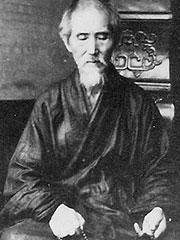
虛雲大師Venerable Master Hsu Yun (Traditional Chinese: 虛雲大師, Simplified Chinese: 虚云, Pinyin: Xū Yún Da Shi, “empty cloud”) (1840-1959) was a renowned Ch’an master and one of the most influential Buddhist teachers of the 19th and 20th centuries. Although many aspects of his life (particularly his great longevity) are disputed by historians and Zen scholars, this article attempts to give an accurate biography, based largely on his own writings and those of his colleagues and successors in Dharma.
Early Life

Hsu Yun was born on April 26th in Fukien, in Imperial China. His mother died during childbirth. He was adopted and made heir to his childless uncle. Ultimately, his grandmother decided he should take two wives, to continue both lines of the family.

His first experience with Buddhism was during the funeral of his grandmother. Soon afterward he began reading the Sutras, and later made a pilgrimage to Nanyo. When he was fourteen years old, he announced that he wished to renounce the material world in favour of a monastic life. His father did not approve of Buddhism and had him instructed in Taoism instead. He found two girls to be his wives. Hsu Yun lived with them, but did not consummate either marriage. From the start, Hsu Yun was dissatisfied with Taoism, which he felt could not reach the deeper truths of existence. He secretly studied the sutras and taught Dharma to his wives.

When he was nineteen, Hsu Yun fled with his cousin Fu Kuo to Kushan monastery at Fuchow. Here, his head was shaved and he received ordination as a monk. When his father sent agents to find him, Hsu Yun concealed himself in a grotto behind the monastery, where he lived in austere solitude for three years. At the age of twenty-five, Hsu Yun learned that his father had died, and his step-mother and two wives had entered a nunnery.

During his years as a hermit, Hsu Yun made some of his most profound discoveries. He visited the old master Yung Ching, who encouraged him to abandon his extreme asceticism in favor of temperance. He instructed the young monk in the sutras and told him to be mindful of the koan, “Who is dragging this corpse of mine?” In his thirty-sixth year, at the encouragement of Yung Ching, Hsu Yun went on a seven-year pilgrimage to P’u T’o Island off the coast of Ningpo, a place regarded by Buddhists as the bodhimandala of Avalokiteshvara. He went on to visit the monastery of King Asoka, and various other Ch’an holy places.

Middle Age

At age forty-three, Hsu Yun reflected on his achievements. He regretted his abandonment of his family, and went on a pilgrimage to the Five-Peaked Mountain of the northwest, the bodhimandala of Manjushri. Here, he prayed for the rebirth of his family members in the Pure Land. Along the way, Hsu Yun is said to have met a beggar called Wen Chi, who twice saved his life. After talking with the monks at the Five-Peaked Mountain, Hsu Yun came to believe that the beggar had been an incarnation of Manjushri.

Having achieved singleness of mind, Hsu Yun traveled west and south, making his way through Tibet. He visited many monasteries and holy places, including the Potala, the seat of the Dalai Lama, and Tashi Lunpo, the monastery of the Panchen Lama. He traveled through India and Ceylon, and then across the sea to Burma. During this time of wandering, Hsu Yun felt his mind clearing and his health growing stronger.

Hsu Yun composed a large number of poems during this period.

Old Age and Enlightenment

After returning to China, the fifty-five year-old Hsu Yun stayed at the monastery of Gao Ming (now Gaoming temple) at Yangzhou, where he studied the sutras. One day he slipped and fell in a river, and was caught in a fisherman’s net. He was carried to a nearby temple, where he was revived and treated for his injuries. Feeling ill, he nevertheless returned to Yangehow. When asked by Gao Ming whether he would participate in the upcoming weeks of meditation, he politely declined, without revealing his illness. Gao Ming regarded this as a great insult, and had Hsu Yun beaten with a wooden ruler. He willingly accepted this punishment, although it worsened his condition.

For the next several days, Hsu Yun sat in continuous meditation. In his autobiography, he wrote: ” the purity of my singleness of mind, I forgot all about my body. Twenty days later my illness vanished completely. From that moment, with all my thoughts entirely wiped out, my practice took effect throughout the day and night. My steps were as swift as if I was flying in the air. One evening, after meditation, I opened my eyes and suddenly saw I was in brightness similar to broad daylight in which I could see everything within and without the monastery..” Soon, Hsu Yun claimed to have achieved Enlightenment, which he described as being like “waking from a dream”.

From that time until his death, Hsu Yun worked as a bodhisattva, teaching the precepts, explaining sutras, and restoring old temples. He worked throughout Asia and did not confine himself to one country. His large following was spread across Burma, Thailand, Malaya, and Vietnam, as well as Tibet and China. Hsu Yun remained in China during World War II and following the rise of the People’s Republic of China, rather than retreat to the safety of Hong Kong or Taiwan.

Shortly before his death, Hsu Yun requested of his attendant: “After my death and cremation, please mix my ashes with sugar, flour and oil, knead all this into nine balls and throw them into the river as an offering to living beings in the water. If you help me to fulfil my vow, I shall thank you for ever.” He died the following day on October 13th, 1959, reputedly at the age of one hundred and twenty.

Significance

Hsu Yun was one of the most influential Ch’an masters of the past two centuries, and arguably the most important in modern Chinese history. Though Ch’an Buddhism’s global importance would later decline dramatically, to be almost totally eclipsed by Japanese Zen, the teachings of Hsu Yun have persisted within Asia, and he is still a major figure of Pure Land Buddhism in East Asia. Outside of China, the influence of his teachings is strongest in Southeast Asia, particularly in Vietnam and Myanmar, as well as the Americas, where his teachings were transmitted through Venerable Master Hsuan Hua.

March 13, 2019 0 comments
0 FacebookTwitterPinterestEmail
Sitagu Buddha Vihara
Buddhism

Vihara

by Sergei March 13, 2019
written by Sergei

Vihara — overview of meaning, background and key points, with links to related topics for context.

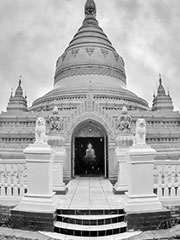
Sitagu Buddha ViharaVihara is Sanskrit or Pali for (Buddhist) monastery. It originally meant “dwelling” or “refuge”, such as those used by wandering monks during the rainy season.

In the early decades of Buddhism the wandering monks of the Sangha had no fixed abode, but during the rainy season (Cf. vassa) they stayed in temporary shelters. These dwellings were simple wooden constructions or thatched bamboo huts. However, as it was considered an act of merit not only to feed a monk but also to shelter him, sumptuous monasteries were created by rich lay devotees (Mitra 1971). They were located near settlements, close enough for begging alms from the population but with enough seclusion to not disturb meditation. Trade-routes were therefore ideal locations for a vihara and donations from wealthy traders increased their economic strength. From the first century CE onwards viharas also developed into educational institutions due to the increasing demands for teaching in Mahayana Buddhism (Chakrabarti 1995).

In the second century BCE a standard plan for a vihara was established. It could be either structural, which was more common in the south of India, or rock-cut like the chaitya-grihas of the Deccan. It consisted of a walled quadrangular court, flanked by small cells. The front wall was pierced by a door, the side facing it in later periods often incorporated a shrine for the image of the Buddha. The cells were fitted with rock-cut platforms for beds and pillows (Mitra 1971). This basic lay-out was still similar to that of the communal space of an ashrama ringed with huts in the early decades of Buddhism (Tadgell 1990).

As permament monasteries became established, the name “Vihara” was kept. Some Viharas became extremely important institutions, some of them evolving into major Buddhist Universities with thousands of students, such as Nalanda.

Life in “Viharas” was codified early on. It is the object of a part of the Pali canon, the Vinaya Pitaka or “basket of monastic discipline”.

The northern Indian state of Bihar derives its name from the workd “Vihara”, probably due to the abundance of Buddhist monasteries in that area.

In Thailand, “Vihara” has a narrower meaning, and designates a shrine hall.

References

  • Chakrabarti, D.K. (1995). Buddhist sites across South Asia as influenced by political and economic forces. World Archaeology 27(2): 185-202.
  • Mitra, D. (1971). Buddhist Monuments. Sahitya Samsad: Calcutta. ISBN 0896844900.
  • Tadgell, C. (1990). The History of Architecture in India. Phaidon: London. ISBN 1854543504.
March 13, 2019 0 comments
0 FacebookTwitterPinterestEmail
Buddhist Religious Philosophy
Buddhism

Buddhist Religious Philosophy

by Sergei March 13, 2019
written by Sergei

Buddhist Religious Philosophy — overview of meaning, background and key points, with links to related topics for context.

Buddhist Religious PhilosophyThe religious philosophies and schools of thought in Buddhism have evolved since Buddha’s death into diverse, and complex traditions.

Three main schools

Buddhism has evolved into myriad schools that can be roughly grouped into three types: Nikaya, Mahayana, and Vajrayana. Of the Nikaya schools, only the Theravada survives. Each branch sees itself as representing the true, original teachings of the Buddha, and some schools believe that the dialectic nature of Buddhism allows its format, terminology, and techniques to adapt over time in response to changing circumstances, thus validating dharmic approaches different from their own.

Although Buddhists concur that taking refuge should be undertaken with proper motivation (complete liberation) and an understanding of the objects of refuge, the Indian scholar Atisha identified that in practice there are many different motives found for taking refuge. His idea was to use these different motivations as a key to resolving any apparent conflicts between all the Buddha’s teachings without depending upon some form of syncretism that would cause as much confusion as it attempted to alleviate. The various motives for taking refuge are enumerated as follows, typically introduced using the concept of the “scope” (level of motivation) of a practitioner:

  • Worldly scope: to improve the lot of this life – this is not a Buddhist motivation.
  • Low scope: to gain high rebirth and avoid the low realms.
  • Middle scope: to achieve Nirvana (liberation from rebirth).
  • High scope: to achieve Buddhahood in order to liberate others from suffering, the basis of the Mahayana path.
  • Highest scope is also sometimes included: to achieve Buddhahood as soon as possible – in this life – which is the scope of the highest teachings on the Vajrayana (tantric) path.

Theravada

  • The Theravada school, whose name means “Doctrine of the Elders”, bases its practice and doctrine exclusively on the Pali Canon, which is a collection of what are known as agamas or nikaya sutras. The nikaya sutras are generally considered by modern scholars to be the oldest of the surviving types of Buddhist literature, and they are accepted as authentic in every branch of Buddhism. Theravada is the only surviving representative of the historical Nikaya branch. Nikaya Buddhism and consequently Theravada are sometimes referred to by the Mahayana as Hinayana or “small vehicle”, although this is considered by some to be impolite. Native Theravada is practiced today in Sri Lanka, Burma, Laos, Thailand, Cambodia and portions of China, Vietnam, and Malaysia. The aim of Nikaya Buddhism is to achieve liberation from rebirth and thus Nirvana.

Mahayana

  • The Mahāyāna (literally “Great Vehicle”) branch emphasizes universal compassion, or bodhicitta, and the selfless ideal of the bodhisattva, whose goal is to achieve Buddhahood in order to be of greatest benefit to other sentient beings. In addition to the Nikaya scriptures, Mahāyāna schools recognize all or part of a genre of scriptures that were first put in writing around 1 CE. These scriptures were written in some form of Sanskrit, except a few manuscripts in Prakrit, and are concerned with the purpose of achieving Buddhahood by following the path of the bodhisattva over the course of what is often described as countless eons of time. Because of this immense timeframe, some Mahāyāna schools accept the idea of working towards rebirth in a Pure Land. The Pure Land is normally conceived of as a state which is not enlightenment in itself but which is a highly conducive environment for working toward enlightenment, although some sources indicate that it is synonymous with enlightenment. Native Mahāyāna Buddhism is practiced today in China, Japan, Korea, and most of Vietnam. The various sub-sects of Mahayana Buddhism include: various schools within Pure Land Buddhism (the dominant variety of Mahayana Buddhism) and Zen. Sub-sects within Mahayana are also due to the variations of local cultural interpretations. ie. Chinese Buddhism, Korean Buddhism, Japanese Buddhism, and Vietnamese Buddhism.

Vajrayana

  • The Vajrayāna or “Diamond Vehicle” (also referred to as Mantrayana, Tantrayana, Tantric or esoteric Buddhism) shares the basic concepts of Mahāyāna, but also includes a vast array of spiritual techniques designed to enhance Buddhist practice. Vajrayana Buddhism exists today in the form of two major sub-schools: Tibetan Buddhism and Shingon Buddhism. One component of the Vajrayāna is harnessing psycho-physical energy as a means of developing profoundly powerful states of concentration and awareness. These profound states are in turn to be used as an efficient path to Buddhahood. Using these techniques, it is claimed that a practitioner can achieve Buddhahood in one lifetime, or even as little as three years. In addition to the Theravada and Mahāyāna scriptures, Vajrayāna Buddhists recognise a large body of texts that include the Buddhist Tantras. Native Vajrayana is practiced today mainly in Tibet, Nepal, Bhutan, Mongolia, Kalmykia (in Russia), Siberia (in Russia), areas of India, and — among the Shingon (Zhènyān, 真言) and Tendai schools — in China and Japan.

See also

  • History of Buddhism
  • History of Buddhist schools
  • Timeline of Buddhism

References

  • K. Sri Dhammananda, . Buddhist Mission Society of Malaysia. (1964) ISBN 9834007127.
  • Thich Nhat Hanh. The Heart of the Buddha’s Teaching. Broadway Books, 1974. ISBN 0767903692.
  • Walpola Rahula. What the Buddha Taught. Grove Press, 1974. ISBN 0802130313.
  • Yin Shun, Yeung H. Wing (translator). The Way to Buddhahood: Instructions from a Modern Chinese Master. Wisdom Publications, 1998. ISBN 0861711335.
March 13, 2019 0 comments
0 FacebookTwitterPinterestEmail
宗密
Buddhism

Zongmi

by Sergei March 13, 2019
written by Sergei

Zongmi — overview of meaning, background and key points, with links to related topics for context.

宗密Zongmi (宗密) (780 – 841), also commonly referred to by the monastic title of Guifeng (圭峰), was a Tang dynasty Buddhist scholar-monk, installed as fifth patriarch of the Huayan school as well as a patriarch of the Heze Chan lineage.

He wrote a number of vitally important essays on the current situation of Buddhism in Tang China, and is one of the most important figures in East Asian Buddhist history in terms of providing modern scholars with a clear analysis of the development of Chan (Zen) and Huayan and the general intellectual/religious climate of his times. Unlike some of his more radical and cryptic Chan contemporaries, he was a meticulous scholar who wrote extensive critical analyses of the various Chan and scholastic sects of the period, as well as numerous scriptural exegeses. Zongmi, like many later Korean monks on whom he extended his influence, was deeply interested in both the practical and doctrinal aspects of Buddhism, and especially concerned about the means of harmonizing the views of those that tended toward exclusivity in either direction. Zongmi studied deeply all the major texts of the Chinese Buddhist canon of his time, specializing in those works with Huayan, Tathāgatagarbha and Chan affinities. He was deeply affected by Huayan thought and is famous for his work in the area of doctrinal classification: the attempt to account for the apparent disparities in the Buddhist doctrines by categorizing them according to their specific aims.

Although he conducted other important studies on texts such as the Huayan Jing, Awakening of Faith, and Diamond Sutra, and dealt with such issues as the rapprochement of the three teachings and the relationship of various schools of Chan, Zongmi’s work on the Sutra of Perfect Enlightenment (Yuanjue Jing)was the centerpiece of his scholarly career. His most important work on the sutra was his Yuanjue Jing Da Shou (Great Commentary on the Sutra of Perfect Enlightenment). During the process of finishing this work, Zongmi wrote a series of abridgments, expansions and discussions of it.

Zongmi’s other notable works include the Yuanren Lun (Inquiry into the Origin of Humanity) and the Chanyuan Zhuquan Jidu (Origins of the Various Chan Teachings).

March 13, 2019 0 comments
0 FacebookTwitterPinterestEmail
智顗
Buddhism

Zhiyi

by Sergei March 13, 2019
written by Sergei

Zhiyi — overview of meaning, background and key points, with links to related topics for context.

智顗Zhiyi (智顗 Wade-Giles: Chih-i; Jp: Chigi) (538–597) is traditionally listed as the fourth patriarch, but actually is the founder of the Tiantai sect of Buddhism in China. Zhiyi is famous for being the first in the history of Chinese Buddhism to elaborate a complete, critical and systematic classification of the Buddhist teachings, in order to explain the seemingly contradictory doctrines of Buddhism. He is also regarded as the first major figure to make a significant break from the Indian tradition, to form an indigenous Chinese system.

Born with the surname Chen (陳) in Huarong, Jing Prefecture (荊州華容), Zhiyi left home to become a monk at eighteen. At 23, he received his most important influences from his first teacher, Nanyue Huisi (慧思) (515-677), a meditation master who would later be listed as Zhiyi’s predecessor in the Tiantai lineage. After a period of study with Huisi, he spend some time working in the southern capital of Jinling (金陵), after which he retired to Tiantai mountain for intensive study and practice with a group of disciples, adapting the Indian meditation practice of zhiguan into his system.

Among his many important works are the Mohe Zhiguan and the Liu Miaofamen. Of the works attributed to him (although many may have been written by his disciples), about thirty are extant.

March 13, 2019 0 comments
0 FacebookTwitterPinterestEmail
支曜
Buddhism

Zhi Yao

by Sergei March 13, 2019
written by Sergei

Zhi Yao — overview of meaning, background and key points, with links to related topics for context.

支曜Zhi Yao (Ch:支曜) was a Kushan Buddhist monk of Yuezhi ethnicity who was involved with the translation of Buddhist texts into Chinese around 185 CE.

His origin is described in his adopted Chinese name by the prefix Zhi (Ch:支), abbreviation of Yuezhi (Ch:月支).

Zhi Yao was a student of Lokaksema. He translated in particular a Mahayana text:

– The Sutra on the Completion of Brightness (Ch:成具光明经, Chengiu guangming jing).

See also

  • Silk Road transmission of Buddhism
March 13, 2019 0 comments
0 FacebookTwitterPinterestEmail
Newer Posts
Older Posts

Must-Read

  • Meditation
  • Zen
  • Dhyāna
  • Buddhism by Country
  • History Of Buddhism
  • Greco-buddhism
  • Avatar
  • Koan
  • Buddha
  • Shambhala Buddhism
  • Dalai Lama
  • Fourteenth Dalai Lama
  • List Of Buddhists
  • Dzogchen
  • Buddhist Art
  • Buddhist Texts
  • Dharma Wheel
  • Mahayana

2016 - 2025 - Buddhism-Guide.com


Back To Top
Buddhism Guide
  • Buddhism Guide